7 Top Garment Manufacturing ERP Software Solutions for 2026
Discover the top garment manufacturing ERP software for 2026 to streamline operations, boost efficiency, and future proof your apparel business with expert insights.

The garment manufacturing industry is experiencing unprecedented change, driven by fast-evolving consumer trends and global competition. Staying ahead in 2026 means embracing advanced technology that can keep pace with these rapid shifts.
That is why garment manufacturing erp software has become a game-changer for factories of all sizes. The right ERP solution streamlines production, improves efficiency, and empowers businesses to adapt quickly in a dynamic marketplace.
In this article, you will discover why ERP is essential for garment manufacturers, learn how to choose the best system, and explore seven top garment manufacturing erp software solutions designed for future-ready operations.
The Importance of ERP in Garment Manufacturing
Garment manufacturing is a dynamic sector, requiring precision and agility to stay competitive. As complexity grows, garment manufacturing ERP software has become essential for companies looking to centralize processes, control costs, and adapt to changing market demands.
Streamlining Complex Production Processes
Production in garment factories is rarely linear. It involves multiple stages, parallel tasks, and frequent coordination between in-house teams and outsourced partners. Garment manufacturing ERP software centralizes these workflows, enabling smooth handoffs, reducing manual errors, and automating job work management. This ensures that every step, from sample creation to final finishing, is tracked and optimized for efficiency.
Enhancing Inventory and Material Management
Managing inventory in the apparel sector is challenging, especially with diverse SKUs and seasonal fluctuations. With garment manufacturing ERP software, businesses gain real-time visibility into raw materials, finished goods, and work-in-progress items. This capability helps prevent stockouts, reduces overproduction, and minimizes wastage. According to the ERP Software for Garment Manufacturing Market Overview, companies leveraging ERP solutions report inventory cost reductions of up to 30 percent, making efficient inventory management a decisive advantage.
Enabling Accurate Cost Control and Profitability
Accurately tracking costs is vital for profitability in garment manufacturing. ERP systems offer granular visibility, letting managers monitor expenses per product, batch, or employee. Garment manufacturing ERP software also allows for real-time comparison between projected and actual costs, highlighting inefficiencies and tracking waste. This level of control helps businesses stay within budget and maximize profit margins.
Improving Supply Chain Visibility and Collaboration
Supply chains in the garment industry span multiple vendors, geographies, and logistics partners. ERP solutions integrate supply chain data, making vendor management, procurement, and production planning more transparent. Real-time order tracking and customer commitment management further enhance collaboration, ensuring timely deliveries and improved client satisfaction.
Driving Data-Driven Decisions and Compliance
Modern garment manufacturing ERP software provides advanced analytics and reporting tools. AI-powered dashboards, voice-enabled queries, and customizable reports turn raw data into actionable insights. These features not only support performance monitoring but also help ensure compliance with regulations like GST and batch traceability, which are increasingly important for both local and export-driven businesses.
Supporting Scalability and Adaptability
As fashion trends shift and businesses grow, scalability becomes critical. ERP platforms are modular and customizable, adapting to new workflows and expanding with business needs. Cloud and mobile support enable distributed teams to manage operations remotely, making garment manufacturing ERP software a future-ready investment for manufacturers of all sizes.
Case Example
Take SNITCH Apparel, for example. By implementing ERP, SNITCH transitioned from a B2B model to a direct-to-consumer (D2C) approach. This strategic move allowed them to optimize production, streamline their supply chain, and respond faster to market trends. Their experience underscores how the right garment manufacturing ERP software can drive transformation across every business layer.
How to Choose the Right Garment Manufacturing ERP Software
Selecting the ideal garment manufacturing erp software is a strategic decision with far-reaching implications for your business. The right solution can transform operations, boost efficiency, and scale with your ambitions. Here is how to evaluate your options with confidence.
Assessing Core Functionalities
Begin by mapping your core operational needs. Essential features for garment manufacturing erp software include multi-level BOM management, process scheduling, inventory and warehouse control, and robust costing tools. Evaluate compliance support for regulations like GST and e-invoicing. Integration with accounting systems is vital; for example, Tally integration for manufacturing ERPs can simplify financial workflows and ensure data accuracy.
Evaluating Industry-Specific Capabilities
Not all ERP systems are created equal. Look for garment manufacturing erp software with modules tailored for apparel, such as size and color variants, batch traceability, wastage tracking, and job work management. Support for both discrete and process manufacturing is key, especially if your business model spans multiple production types.
Considering User Experience and Adoption
A system is only as effective as its users' ability to adopt it. Prioritize garment manufacturing erp software with mobile-first, intuitive interfaces that shop-floor supervisors and staff can navigate easily. Solutions offering local language support and minimal training requirements will accelerate adoption and reduce disruptions.
Customization and Scalability
Every garment business has unique workflows and SOPs. Choose garment manufacturing erp software built with modular architecture, allowing you to customize processes and add features as your company grows. Scalable platforms can support your evolution from MSME to a large enterprise without costly system changes.
Integration and Ecosystem Compatibility
Your ERP should fit seamlessly into your existing technology landscape. Assess garment manufacturing erp software for compatibility with tools like Tally, e-commerce platforms, and CRM systems. API availability is important for future-proofing and enables you to connect with new business applications as needs evolve.
Support, Implementation, and Training
Effective implementation is essential for success. Opt for garment manufacturing erp software providers that deliver on-site setup, hands-on training, and ongoing support. Vendors who guide you through continuous improvement will help maximize the value of your investment and ensure long-term satisfaction.
Pricing and ROI Considerations
Transparent pricing models are critical for budgeting. Evaluate garment manufacturing erp software providers who offer scalable packages that align with your business size and growth plans. Consider the typical ROI, with industry data showing up to 25 percent efficiency gains in the first year after implementation.
7 Top Garment Manufacturing ERP Software Solutions for 2026
Choosing the right garment manufacturing erp software in 2026 is a pivotal decision for any apparel business. With evolving industry challenges, only the most robust and flexible ERP platforms can help manufacturers remain competitive, efficient, and agile. Below, we break down the seven leading garment manufacturing erp software solutions, each tailored to optimize operations, reduce costs, and support growth. Whether you're a startup or a global enterprise, these solutions address the unique needs of garment manufacturers and offer tools to future-proof your business.
Trakto
Trakto stands out as a next-generation garment manufacturing erp software purpose-built for Indian manufacturers. Its AI-powered analytics and real-time inventory tracking empower businesses to make faster, smarter decisions. With a mobile-first design, even shop floor supervisors can access vital information at their fingertips, boosting productivity.
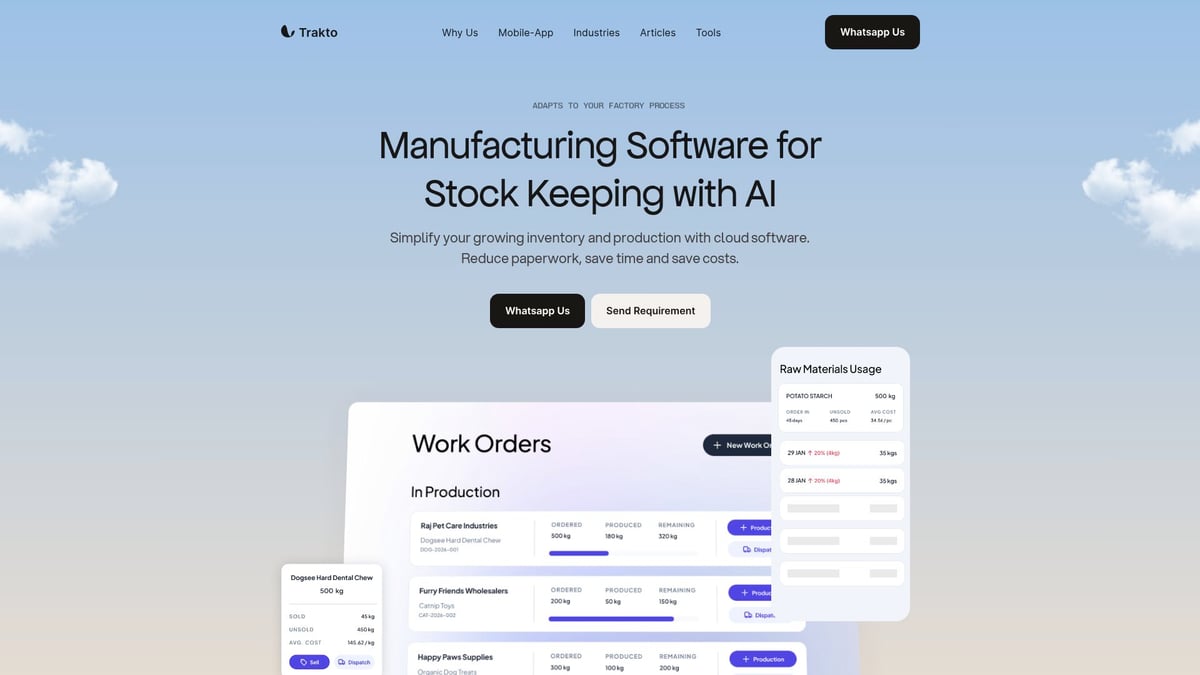
Key features include voice-enabled data queries, multi-variant stock management, batch traceability, and seamless job work support. Trakto integrates directly with Tally, ensuring smooth accounting processes and compliance. Pricing is based on factory size and requirements, making it scalable for MSMEs and large enterprises alike.
Adoption is swift thanks to its user-friendly interface and minimal training requirements. Trakto's team offers on-site customization to digitize factory workflows, ensuring the garment manufacturing erp software fits unique operational needs. Pros include rapid deployment, AI-driven insights, strong local support, and a paperless approach.
One limitation is its current focus on Indian manufacturing norms, so global compliance may need extra customization. However, its voice-enabled analytics and modular workflows set it apart. Many businesses have reported significant cost savings, echoing findings such as those in Cut Costs 23% with Garment Manufacturing ERP in 2026. Trakto is an ideal garment manufacturing erp software for companies seeking digital transformation and operational excellence.
WFX Apparel ERP
WFX Apparel ERP is a comprehensive cloud-based garment manufacturing erp software designed specifically for the apparel industry. Its subscription-based, tiered pricing ensures accessibility for businesses of all sizes, from emerging brands to established global players.
The platform excels in supply chain management, production planning, merchandise management, quality control, and advanced analytics. With robust support for multi-location operations, WFX Apparel ERP enables real-time collaboration and centralized data access, critical for fast-paced garment manufacturing environments.
Its intuitive interface and flexible deployment options make onboarding seamless. The garment manufacturing erp software supports global operations, with strong analytics and mobile accessibility. Pros include scalable architecture, detailed reporting, and a dedicated apparel focus. Premium features are available at higher tiers, and some users may need external accounting integrations.
WFX Apparel ERP stands out for its end-to-end industry alignment and powerful mobile support. Its flexible modules adapt to changing business requirements, making it a preferred garment manufacturing erp software for organizations aiming to scale and optimize complex workflows.
Odoo ERP
Odoo ERP brings open-source flexibility to garment manufacturing erp software. Its modular, pay-per-app pricing allows businesses to start small and scale as needed, making it suitable for MSMEs and large enterprises.
Core features include manufacturing management, multi-level BOM, inventory and warehouse control, accounting, CRM, and e-commerce integration. The platform’s adaptability enables garment manufacturers to customize workflows, ensuring the garment manufacturing erp software fits their exact needs.
Odoo’s open-source ecosystem fosters innovation, with a vast marketplace of third-party apps and strong community support. Mobile access and broad integration capabilities add to its appeal. However, deeper customization may require technical expertise, and some advanced features are paid add-ons.
Its unique selling points are adaptability and a global support network, making it a go-to garment manufacturing erp software for firms prioritizing customization, integration, and cost control. Businesses benefit from a solution that evolves alongside their growth and changing market demands.
Datatex NOW
Datatex NOW is specialized garment manufacturing erp software designed for large apparel and textile manufacturers. Its enterprise-level, quote-based pricing reflects the platform’s depth and customization options, making it a choice for complex operations.

The garment manufacturing erp software delivers real-time inventory and production tracking, shop floor control, financial analytics, and compliance support. Datatex NOW excels in supporting multi-site, global operations with extensive textile and apparel expertise.
Pros include industry-specific features, strong compliance tools, and scalability. Its comprehensive modules streamline production planning and supply chain management. However, the platform’s rich functionality means higher costs and potentially longer implementation, making it less suitable for small firms.
Datatex NOW’s unique selling points are its textile specialization and compliance-driven design. For manufacturers facing regulatory demands and global coordination challenges, this garment manufacturing erp software is a powerful ally in driving efficiency and transparency across the value chain.
Logic ERP
Logic ERP is a proven garment manufacturing erp software trusted by Indian garment manufacturers, retailers, and distributors. It offers both on-premise and cloud deployment, with pricing tailored to business size and needs.

Key features include process management, inventory and warehouse control, material requirement planning, cost management, supply chain integration, and robust reporting. Logic ERP is fully customizable, supporting both discrete and process manufacturing models.
The garment manufacturing erp software shines in its deep garment industry modules and strong support for Indian compliance requirements. Mobile reporting and flexible deployment make it adaptable to different business models. However, its primary focus on the Indian market may limit global applicability.
Logic ERP’s comprehensive cost management and flexible architecture make it a preferred garment manufacturing erp software for those seeking a balance between industry depth and ease of use. Its extensive documentation and active support community further enhance user experience.
DoFort Garment Manufacturing Software
DoFort Garment Manufacturing Software is tailored for mid-sized garment businesses seeking an integrated solution. As a garment manufacturing erp software, it excels in order management, production tracking, CRM, advanced reporting, and workflow automation.
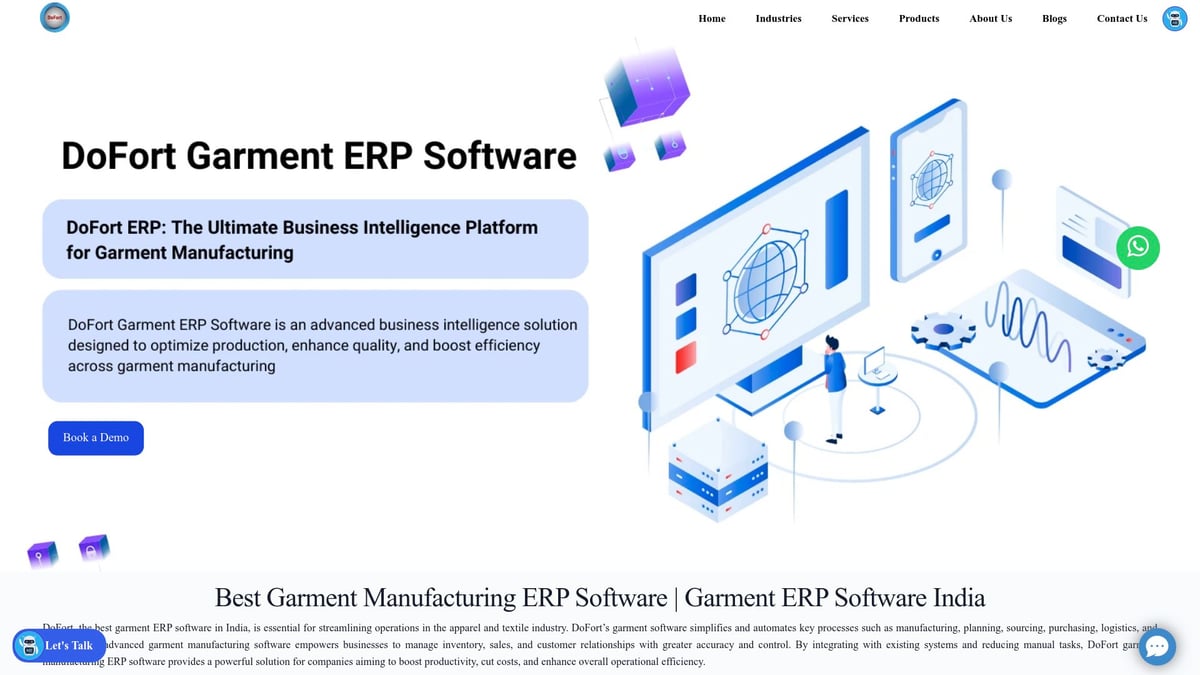
Pricing is based on business requirements, ensuring a customized approach. DoFort’s collaboration tools and user-friendly design streamline order-to-fulfillment processes. The garment manufacturing erp software offers real-time monitoring and flexible workflows, enabling teams to adapt quickly to changes in demand or supply.
DoFort’s CRM integration supports better client communication and customer-centric service. While it may be less known in global markets and integration can require custom work, its end-to-end automation and tailored approach are significant advantages.
For growing businesses needing a garment manufacturing erp software that bridges production and customer management, DoFort offers a compelling, scalable solution that enhances both operational efficiency and client satisfaction.
SAP S/4HANA for Fashion and Vertical Business
SAP S/4HANA for Fashion and Vertical Business is a leading garment manufacturing erp software for large, complex apparel enterprises. Its enterprise-level subscription or licensing supports robust scalability, global compliance, and advanced analytics.
The platform provides end-to-end supply chain management, production planning, real-time dashboards, and multi-channel integration. SAP S/4HANA’s analytics capabilities empower garment manufacturers to make data-driven decisions and optimize every aspect of their operations.
Pros include global support, extensive integration ecosystem, and industry-leading security. However, the garment manufacturing erp software is best suited for large organizations due to its cost and implementation complexity.
SAP S/4HANA’s unique selling points are its enterprise-grade reliability and fashion industry focus. For global apparel brands, this garment manufacturing erp software delivers the tools needed to manage multi-site operations, ensure compliance, and drive innovation at scale.
Key Trends Shaping Garment ERP Software in 2026
The landscape of garment manufacturing erp software is rapidly transforming as technology advances and market demands shift. In 2026, several key trends are shaping how apparel businesses select, implement, and benefit from ERP solutions. These trends are not only driving operational efficiency but also ensuring manufacturers stay resilient and agile in a highly competitive environment. According to the Apparel Management Software Market Forecast 2026-2032, the sector is expected to see accelerated growth, fueled by these technological and business shifts.
AI and Automation Integration
AI and automation are now cornerstones of garment manufacturing erp software. Modern ERPs leverage machine learning for predictive analytics, automated scheduling, and intelligent alerts.
Voice-enabled data queries allow supervisors to access production analytics instantly.
Automated inventory tracking reduces manual errors.
AI-driven recommendations optimize raw material usage and minimize waste.
These innovations help manufacturers respond quickly to market changes and improve decision accuracy.
Cloud and Mobile-First Solutions
The move from on-premise to cloud-based garment manufacturing erp software is accelerating. Cloud solutions offer scalability, remote access, and simplified IT management.
Mobile apps empower supervisors to monitor production from any location.
Real-time updates keep distributed teams aligned.
Automatic software updates ensure access to the latest features.
This flexibility is essential for manufacturers managing multiple sites or remote teams.
Industry-Specific Customization
Garment manufacturing erp software increasingly features industry-specific modules tailored for apparel production.
Support for size and color variants is now standard.
Batch-wise tracking and wastage control are built into workflows.
Integration with local accounting tools is prioritized.
Such customization ensures that ERP systems align closely with unique business needs and regulatory requirements.
Data-Driven Decision Making
Data analytics capabilities in garment manufacturing erp software have evolved from basic reporting to real-time dashboards and predictive insights.
AI-powered dashboards display KPIs and alerts for quick action.
Predictive analytics identify trends in sales and production.
Customizable reports support detailed performance analysis.
Manufacturers now base critical decisions on accurate, actionable data, leading to higher efficiency and profitability.
Compliance and Traceability
Compliance and traceability are top priorities for garment manufacturing erp software users, especially for exporters and regulated businesses.
Built-in GST and e-invoicing modules simplify compliance.
Batch-wise traceability ensures quality control and recall readiness.
Automated audit trails support transparency.
These features reduce risk and support long-term business sustainability.
Scalability and Modular Growth
Modern garment manufacturing erp software is designed for scalability, accommodating both MSMEs and large global enterprises.
Modular pricing allows businesses to pay for only what they need.
Feature sets can expand as the company grows.
Cloud infrastructure supports seamless scaling.
This approach makes ERP adoption feasible for companies at every stage of growth.
Customer-Centric Features
Customer experience is now central to garment manufacturing erp software design.
Integrated CRM modules enhance communication and service.
Real-time order tracking improves transparency for clients.
Feedback loops support continuous improvement.
These features help manufacturers build lasting relationships and differentiate in a crowded market.
ERP Implementation Best Practices for Garment Manufacturers
Implementing garment manufacturing erp software is a transformative step for any apparel business. Success hinges on a structured approach, clear goals, and a commitment to continuous improvement. The following best practices help ensure a smooth and impactful ERP rollout.
Conducting Thorough Needs Assessment
Before selecting garment manufacturing erp software, map out your current workflows in detail. Identify bottlenecks, manual tasks, and pain points from procurement to shipping. Engage teams from production, inventory, sales, and finance to gather diverse input. This holistic assessment ensures the software aligns with your real-world needs and sets clear expectations for your ERP journey.
Prioritizing Change Management and Training
Change management is vital for ensuring adoption of garment manufacturing erp software. Invest in onboarding and training, focusing on shop-floor supervisors and non-technical staff. User-friendly interfaces, local language support, and hands-on workshops can dramatically reduce resistance. For example, solutions like Trakto offer minimal training requirements, accelerating digital transformation.
Phased Implementation and Testing
Rolling out garment manufacturing erp software in phases minimizes disruption. Start with core modules such as inventory and production, then expand to advanced analytics or CRM. Pilot testing with key teams allows you to collect feedback, fix issues, and fine-tune configurations. This stepwise approach builds user confidence and leads to more stable deployments.
Ensuring Data Migration and Integration
Seamless migration of legacy data is essential for garment manufacturing erp software success. Plan data mapping, cleansing, and validation early in the project. Ensure integration with existing tools like accounting, e-commerce, or payroll systems. Addressing data consistency up front prevents costly errors and ensures reliable reporting from day one.
Customization and Continuous Improvement
Choose garment manufacturing erp software with modular architecture and robust customization options. Tailor workflows, reports, and user roles to match unique business processes. Regularly review system performance and collect user feedback for ongoing enhancements. For more insights on how leading solutions support continuous improvement, see Top 8 Apparel ERP Software in the World for 2026.
Leveraging Vendor Support and Community Resources
Strong vendor support is critical for long-term ERP success. Opt for providers offering on-site implementation, comprehensive training, and active user communities. Tap into available ERP resources and guides, such as those listed in the Trakto sitemap for ERP resources, to troubleshoot challenges and maximize system value.
Measuring ROI and Success Metrics
After deploying garment manufacturing erp software, define clear KPIs like operational efficiency, inventory turnover, and cost savings. Track these metrics regularly to quantify improvements and guide future optimizations. Transparent measurement ensures your ERP investment delivers tangible value and supports ongoing decision-making.
Now that you’ve seen how the right ERP can transform every stage of garment manufacturing—from streamlining production and inventory to enabling paperless, AI-driven insights—it’s clear that investing in the right solution is key for staying ahead in 2026. If you’re ready to take the next step, have questions about features, or want guidance tailored to your factory’s needs, I’m here to help. Let’s make your transition to smarter, more efficient manufacturing as smooth as possible.
Whatsapp Us
and get started on optimizing your business today.
Article written using RankPill.

